
When the clock strikes midnight on December 31st, the world celebrates the start of a new calendar year. But for governments, multinational corporations, and accountants, “New Year” is a concept that happens all over the calendar.
This alternate timeline is known as the financial year (or fiscal year)—an invisible clock that dictates how the global economy budgets, taxes, and reports its wealth.
What is a Financial Year?
A financial year is a designated 12-month period used by governments, businesses, and individuals for accounting, budgeting, and tax reporting. While a standard calendar year always begins on January 1st, a financial year can theoretically begin on the first day of any month.
The Global Patchwork: How It Differs by Country
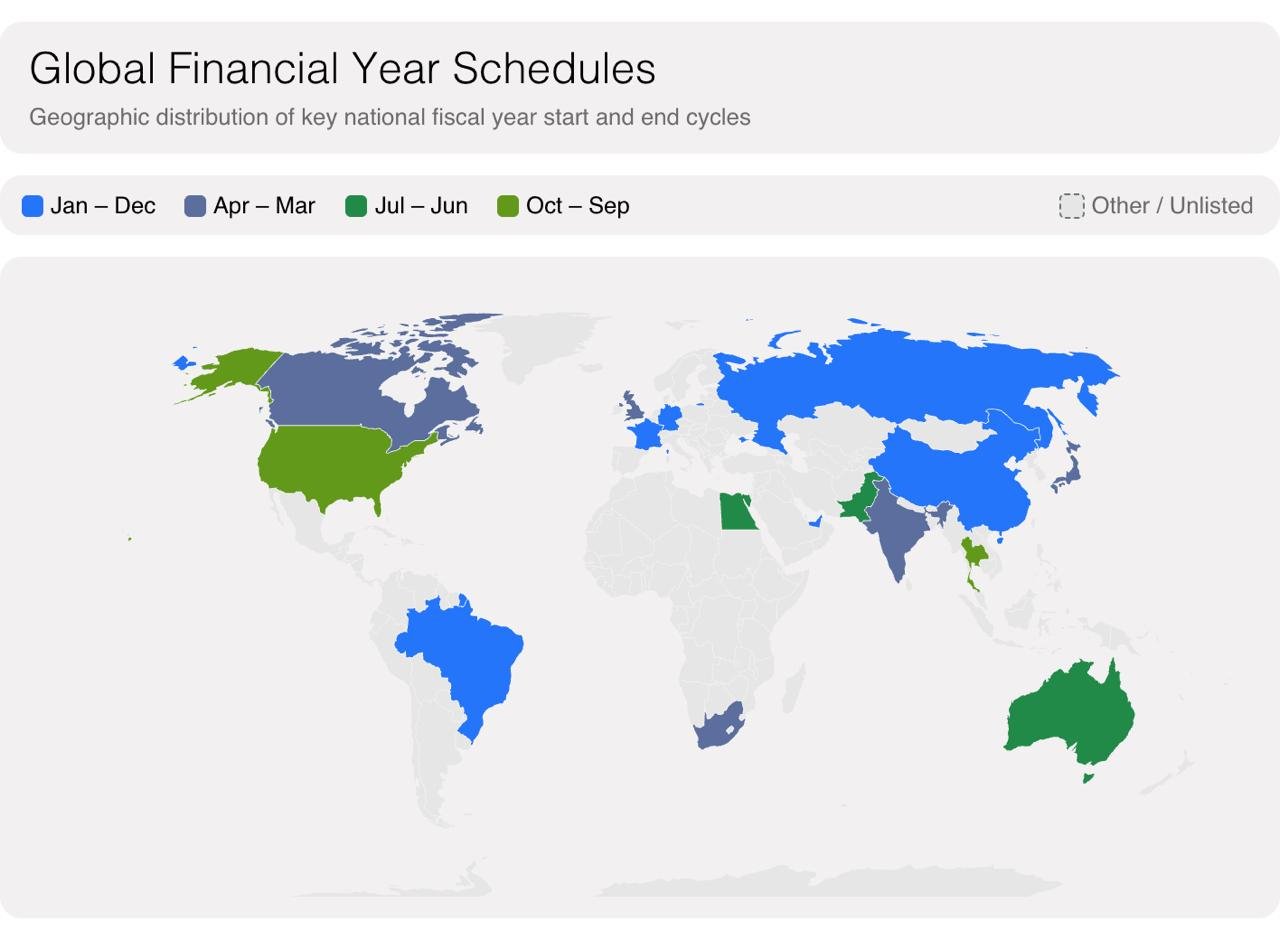
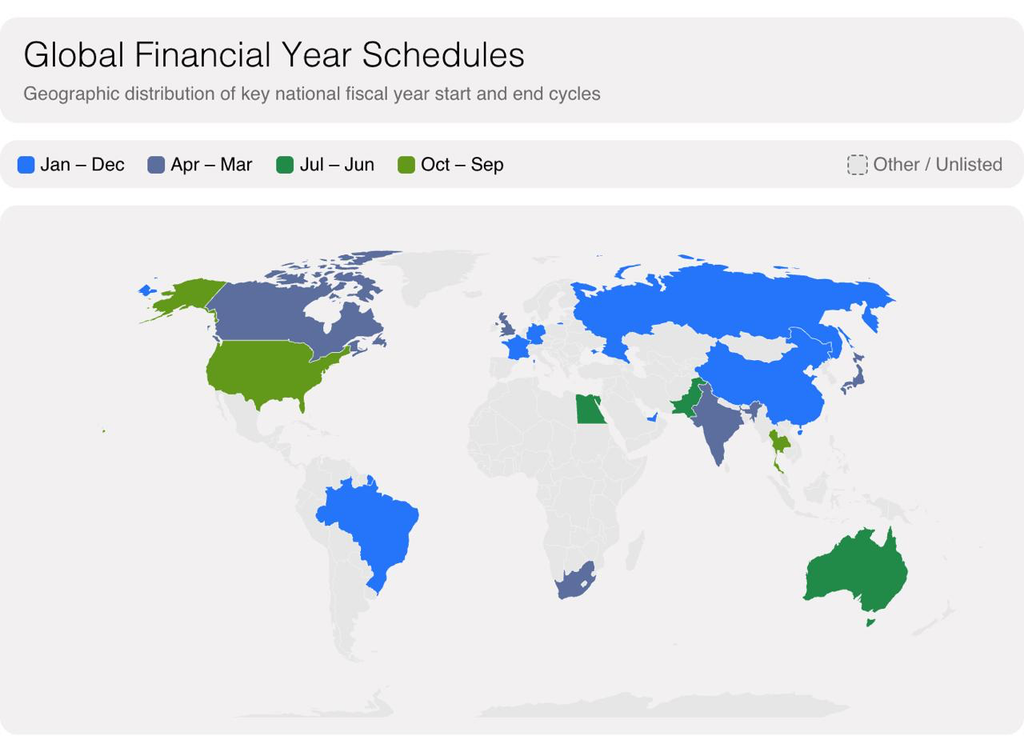
If you look at the global economy, you will find four primary financial year structures. A country’s choice is often deeply rooted in its agricultural history, legislative schedules, or colonial past.
For example, the United States federal government shifts its calendar to allow Congress time to pass budgets after the summer recess. At the same time, India’s April start date is a legacy of British colonial rule that aligned with the spring harvest.
The Four Primary Fiscal Timelines
- The Standard Calendar Year (Jan 1 – Dec 31): This is the most common approach globally. Powerhouses like China, Russia, Brazil, the UAE, and most European countries (including Germany and France) align their financial books perfectly with the standard calendar.
- The Spring Start (Apr 1 – Mar 31): Used by major economies like India, the United Kingdom, Japan, Canada, and South Africa. (Note: While the UK government and corporate year starts April 1, the UK personal tax year uniquely starts on April 6).
- The Mid-Year Shift (Jul 1 – Jun 30): Australia, Egypt, and Pakistan reset their financial clocks in the middle of the calendar year to align with their specific national legislative and economic cycles.
- The Autumn Cycle (Oct 1 – Sep 30): The United States federal government operates on this unique cycle, though most U.S. corporations and individual taxpayers still use the standard January–December year. Thailand also utilises an October start for its government budgeting.
Global Financial Year Quick Reference
| Financial Year Period | Notable Countries / Entities |
|---|---|
| Jan 1 – Dec 31 | China, France, Germany, Russia, Brazil, UAE |
| Apr 1 – Mar 31 | India, United Kingdom, Japan, Canada, South Africa |
| Jul 1 – Jun 30 | Australia, Egypt, Pakistan |
| Oct 1 – Sep 30 | United States (Federal Gov), Thailand |
The Significance of the Financial Year
The financial year is the heartbeat of an economy. It dictates the rhythm of major national and corporate events across three main pillars:
- Government Budgets: It acts as the timeline for the national budget, determining how public money will be allocated and spent on infrastructure, defence, and social programs for the upcoming cycle.
- Taxation: It sets the official deadlines for when businesses and citizens must calculate, file, and pay their taxes without facing penalties.
- Corporate Accountability: Publicly traded companies must publish quarterly and annual financial reports based on their specific fiscal year. This allows investors and regulators to accurately gauge profitability and financial health over a consistent 12-month period, enabling year-over-year comparisons.
Understanding these timelines is crucial for anyone investing globally, running a multinational business, or simply following international economic news. The next time you hear about a country passing its annual budget, you’ll know exactly which “New Year” they are celebrating.