
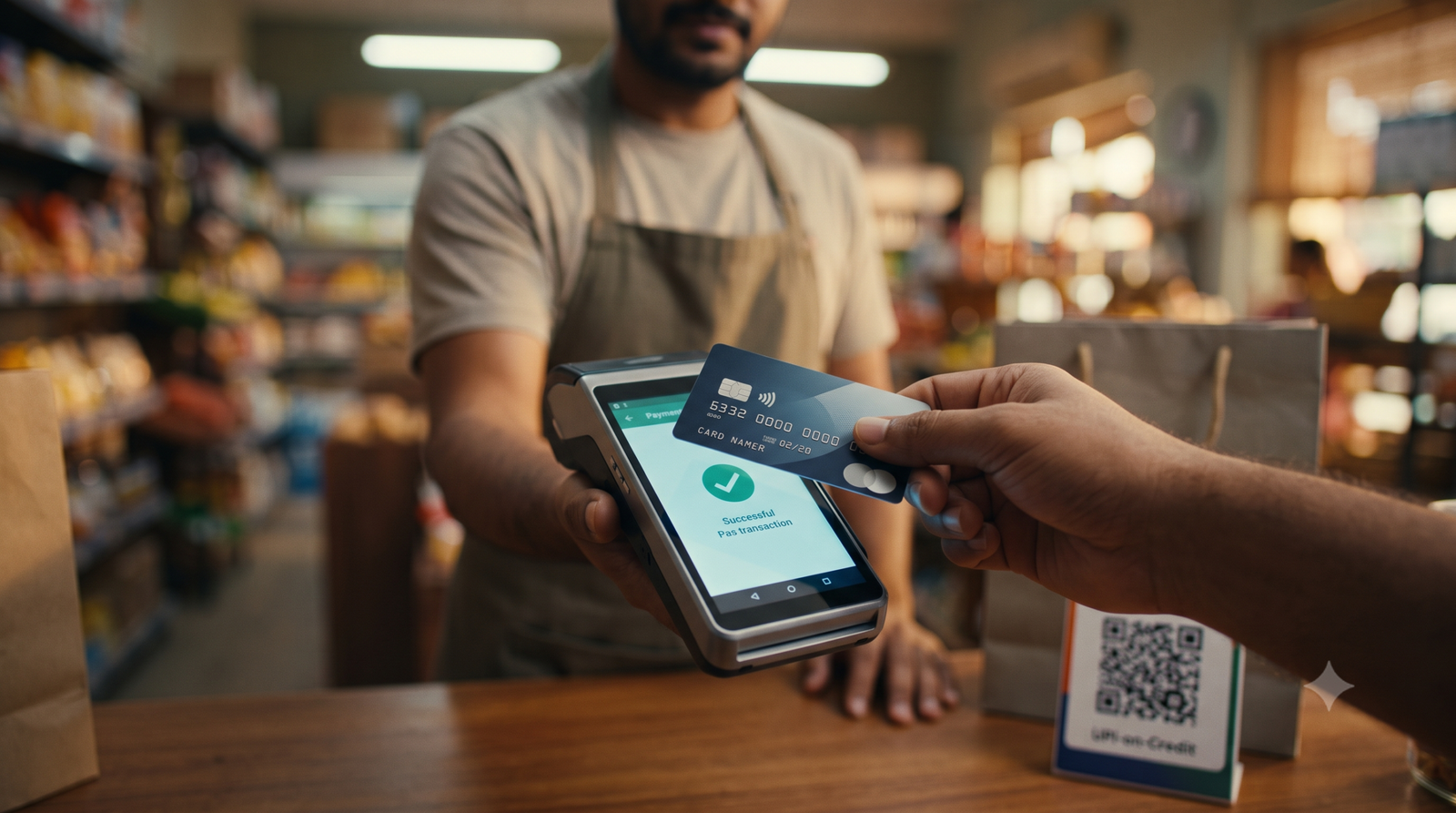
Picture this: You step out of your home needing some cash. Instead of waiting in a long queue to see a bank teller, you walk up to an ATM, insert a small rectangular card, enter your PIN, and within seconds, the money is in your hands. That seamless convenience is the traditional power of a debit card. Today, however, it does much more than just dispense cash—it is your everyday tool for retail shopping, booking tickets, and making secure online payments.
What is a Debit Card?
A debit card is a physical or virtual payment instrument issued by your bank, directly linked to your savings or current account. Every time you make a transaction—whether at a local shop, an ATM, or an online checkout—the funds are immediately deducted from your available bank balance. Unlike a credit card, there is no borrowing or line of credit involved; you can only spend the money you already have.
How Does a Debit Card Work? (The Millisecond Magic)
When you use a debit card, a complex verification process happens behind the scenes in a matter of milliseconds:
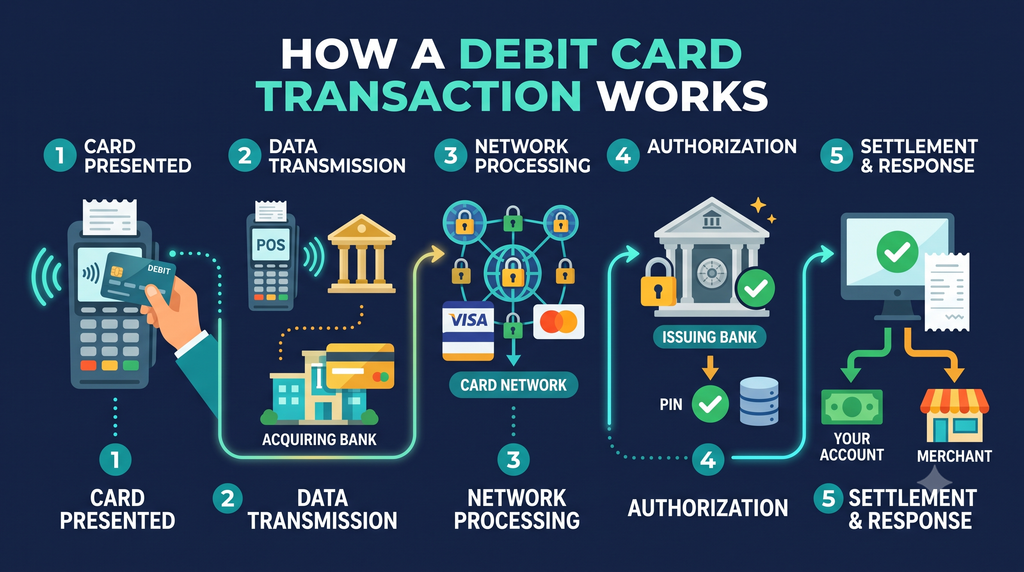
- Initiation: You swipe, dip the chip, or tap your card at a Point of Sale (POS) terminal, or enter the details into an online payment gateway.
- Data Transmission: The terminal securely encrypts your card data and sends it to the acquiring bank (the merchant’s bank).
- Network Routing: The acquiring bank routes this transaction through a card network (such as RuPay, Visa, or Mastercard) to your specific issuing bank.
- Authorisation: Your bank verifies your credentials (PIN, CVV, or OTP), checks if you have sufficient funds, and either approves or declines the request.
- Response: The approval or decline status is instantly sent back to the merchant’s terminal.
- Settlement: The funds are blocked and subsequently debited from your account, officially settling with the merchant within 24 to 48 hours.
Types of Debit Cards in India
Depending on your banking partner, you will likely be issued one of the following types of networks or card formats:
- RuPay Debit Card: India’s indigenous card payment network launched by the National Payments Corporation of India (NPCI). It is widely issued (especially for Jan Dhan accounts) and processes transactions domestically, keeping costs low. RuPay cards offer universal acceptance at Indian ATMs and POS terminals, and many variants provide a free accidental insurance cover of up to ₹2 lakh. Premium variants also offer international acceptance.
- Visa Debit Card: A global titan in the payment industry, accepted in over 200 countries. Visa cards offer seamless currency conversion for international travel, a Zero Liability Policy for unauthorised transactions, and robust online security via the “Verified by Visa” framework.
- Mastercard Debit Card: Operating on a scale similar to Visa, Mastercard provides worldwide acceptance, strong online protection through “Mastercard SecureCode,” and premium benefits like purchase protection and travel insurance on higher-tier cards.
- Contactless (NFC) Debit Card: These cards feature Near Field Communication (NFC) technology. You simply tap the card against a compatible POS terminal to pay. Per Reserve Bank of India (RBI) guidelines, contactless transactions up to ₹5,000 can be processed without entering a PIN. Anything above this limit requires PIN authentication.
- Virtual Debit Card: Existing entirely in the digital space, a virtual debit card has no physical plastic form. Generated through your mobile banking app, it provides a card number, CVV, and expiry date exclusively for secure online shopping.
Key Benefits of Using a Debit Card
- No Debt Trap: Because you only spend your own money, there is zero risk of accumulating debt or paying high interest rates.
- 24/7 Liquidity: Access your cash at any ATM, anywhere in the country, at any time.
- Budget Control: Real-time bank deductions make it easy to track your daily expenses and stick to your budget.
- Zero Interest: You will never be charged interest on your purchases.
- Robust Fraud Protection: RBI mandates strict zero-liability protection for customers against unauthorised electronic transactions, provided they are reported promptly.
- Rewards & Perks: Many modern debit cards offer cashback, shopping discounts, and reward points, mimicking traditional credit card benefits.
Understanding Debit Card Fees
While you don’t have to worry about the steep interest rates or late payment fees associated with credit cards, debit cards do carry a few minor costs you should be aware of:
- Annual Maintenance Charge (AMC): Most banks charge a nominal yearly fee to maintain the card.
- ATM Usage Limits: Banks typically offer a set number of free ATM withdrawals per month (usually 3 to 5). Exceeding this limit incurs a small fee per transaction.
- Foreign Markup Fees: If you use your debit card internationally, a currency conversion fee (usually 1.5% to 3.5%) is applied to the transaction.
Debit Cards vs. Other Payment Cards
To optimise your finances, it is important to understand how debit cards differ from other pieces of plastic in your wallet:
- Credit Cards: Instead of deducting money from your checking account, a credit card allows you to borrow against a pre-approved line of credit. You must pay the balance back later, often with interest if not paid in full. They generally offer superior rewards, travel benefits, and purchase protections, making them ideal for large expenses.
- ATM Cards: These are strictly single-purpose cards. They can only be used to withdraw cash or check your balance at an ATM. You cannot swipe them at a retail store or use them online.
- Prepaid Cards: If you do not have a bank account, you can purchase a prepaid card and load it with a specific amount of cash. You can only spend what you load. These are excellent tools for minors or individuals adhering to a strict, non-negotiable budget.
Debit cards remain one of the most accessible and responsible ways to manage your money. Whether you are paying for groceries with a quick tap, withdrawing cash for a weekend trip, or securely checking out an online shopping cart, a debit card keeps your finances moving fluidly without the looming threat of rolling debt.