
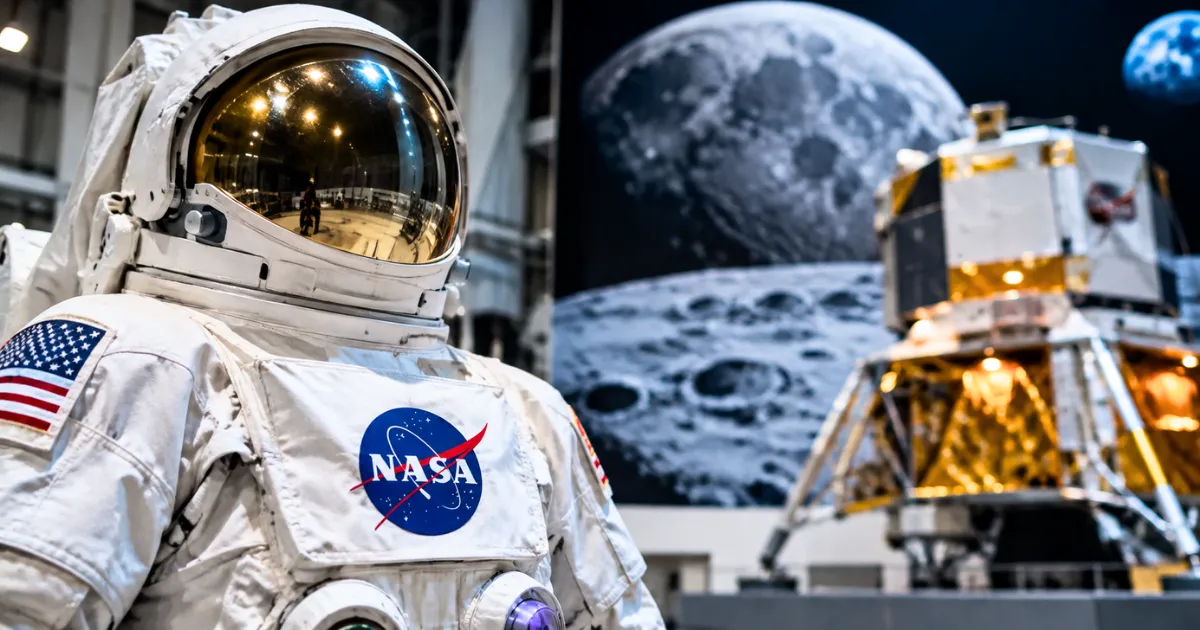
NASA is looking for its next generation of astronauts as the United States prepares for a new phase of lunar exploration. The agency opened applications for its 25th astronaut candidate class on November 7, 2026, offering qualified U.S. citizens an opportunity to join missions connected to the Artemis program and NASA’s planned Moon Base.
The announcement has attracted attention because selected candidates could eventually walk on the Moon, live and work on the lunar surface, and help develop technologies for future missions to Mars. However, this is not a general recruitment drive for people to move to the Moon. NASA is selecting highly qualified astronaut candidates who will undergo years of preparation before receiving any potential flight assignment.
The application deadline is December 3, 2026, at 11:59 p.m. Eastern Time. NASA plans to reveal its final selections in late 2027, while the selected candidates are expected to begin their training in early 2028.
Key Takeaways
- NASA opened applications for its 25th astronaut candidate class on November 7, 2026.
- The application deadline is December 3, 2026, at 11:59 p.m. EST.
- Applicants must be U.S. citizens and meet NASA’s education, professional experience and medical requirements.
- A qualifying master’s degree in a STEM field is generally required, with several accepted alternatives.
- NASA’s published 2026 salary estimate for astronauts is approximately $164,395 per year.
- Selected candidates will complete approximately two years of astronaut training.
- NASA expects to announce the new class in late 2027.
- The recruitment supports the Artemis program, the planned Moon Base and future human exploration of Mars.
What Happened? NASA Opens Its Next Astronaut Recruitment Drive
NASA is looking for candidates capable of contributing to more advanced and demanding human spaceflight missions. Their preparation will include training in spacewalk procedures, lunar geology, high-performance aircraft operations and other essential skills required for missions extending beyond low Earth orbit.
NASA Administrator Jared Isaacman said the people selected could eventually walk on the Moon, live and work at the Moon Base, and help develop systems for future crewed missions to Mars.
This recruitment is particularly important because NASA currently has 32 active astronauts in its astronaut corps. The agency said it has selected 370 people for astronaut training since the 1960s.
The previous recruitment campaign, which opened in 2024, attracted more than 8,000 applications. NASA selected 10 candidates in 2025.
NASA Astronaut Job: Application Deadline and Salary
People interested in applying should review the official vacancy announcement rather than rely on social media posts or unofficial recruitment advertisements.
Here are the main details:
| Recruitment detail | Information |
|---|---|
| Agency | NASA |
| Position | Astronaut Candidate |
| Applications opened | November 7, 2026 |
| Application deadline | December 3, 2026 |
| Closing time | 11:59 p.m. EST |
| Expected selection | Late 2027 |
| Expected training start | Early 2028 |
| Training duration | Approximately two years |
| Published 2026 salary estimate | $164,395 per year |
| Application platform | USAJOBS |
NASA’s astronaut FAQ lists $164,395 as an approximate annual salary based on 2026 pay schedules. The amount may be adjusted for future pay schedules, and military astronaut candidates generally remain on their military pay and benefits arrangements.
Who Can Apply for NASA’s Astronaut Program?
NASA’s astronaut selection process is highly competitive. Applicants must satisfy specific citizenship, education, experience and medical standards.
1. U.S. Citizenship
Applicants must be citizens of the United States to qualify for this NASA civil-service astronaut position.
This is an important restriction for international applicants. Having a science or engineering degree from a U.S. university does not replace the citizenship requirement.
2. Educational Qualifications
The standard educational requirement is a master’s degree from an accredited institution in a relevant STEM field, including:
- Engineering
- Biological science
- Physical science
- Computer science
- Mathematics
NASA also accepts several alternatives to the standard master’s degree requirement.
These include at least two years of doctoral study in a related technical field, qualifying medical degrees and completion of an approved test pilot school program.
Accepted medical qualifications include a Doctor of Medicine, Doctor of Osteopathic Medicine, Physician Assistant, Doctor of Nursing Practice and Family Nurse Practitioner degrees, among other related medical qualifications specified by NASA.
3. Professional Experience
Applicants generally need at least three years of related professional experience after completing their qualifying degree.
Pilots can meet the experience requirement through specified flight hours instead:
| Aircraft experience | Required flight time |
|---|---|
| High-performance jet aircraft | 750 hours as pilot in command |
| Other fixed-wing aircraft | 1,500 total hours, including 750 as pilot in command |
| Rotary-wing aircraft | 1,000 total hours, including 300 as pilot in command |
For medical doctors, residency training may count toward the professional experience requirement, provided it is completed by July 2027.
4. Medical and Physical Requirements
Applicants must successfully complete NASA’s long-duration astronaut flight physical.
The agency also looks for strong leadership, teamwork and communication abilities. These skills are essential because astronauts must operate in demanding environments where coordination, judgment and clear communication can directly affect mission safety.
Meeting the basic requirements does not guarantee selection. NASA evaluates applications and invites a much smaller group of qualified candidates for further interviews and assessments.
How Much Does NASA Pay Astronauts?
NASA’s astronaut FAQ lists an approximate annual salary of $164,395, based on the 2026 federal pay schedules.
This is a published salary estimate, not a guaranteed take-home amount for every candidate. Future pay adjustments, employment status and individual circumstances can affect compensation.
Military personnel selected for the astronaut program generally remain on active-duty military arrangements for salary, benefits and leave.
For applicants considering the position, compensation is only one part of the opportunity. Astronaut candidates must complete demanding training and may wait years before receiving a mission assignment.
What Will Selected Astronauts Do?
The new astronaut class will support NASA’s expanding human exploration plans.
Their work will not be limited to traveling to the Moon. Astronauts contribute to mission planning, technical testing, scientific research, spacecraft operations and the development of procedures needed for future exploration.
Training at Johnson Space Center in Houston is expected to last approximately two years.
Candidates will develop skills in areas such as:
- Spacewalking and spacecraft operations
- Lunar geology and surface exploration
- High-performance aircraft operations
- Robotic systems and equipment handling
- Teamwork and mission preparation
NASA emphasizes that becoming an astronaut does not mean an immediate trip into space. Candidates must first complete training and later receive assignments based on mission requirements.
The eventual opportunity to fly to the Moon is possible, but no individual candidate is guaranteed a lunar mission.
How NASA’s Moon Base Plan Connects to the Artemis Program
The recruitment drive is part of NASA’s broader effort to establish a sustained human presence on the lunar surface.
The agency’s Moon Base strategy is designed to develop the transportation, technology and infrastructure needed to support longer-term lunar operations, particularly near the Moon’s south pole.
That work requires much more than astronauts. It also involves robotic vehicles, landing systems, communications, power infrastructure, scientific equipment and commercial partnerships.
NASA’s November 7 announcements included new awards and mission updates involving commercial lunar deliveries, transportation services, surface infrastructure and a planned nuclear-powered rover called PROMISE.
The agency is also working with private aerospace companies, including SpaceX and Blue Origin, on systems that will support future human exploration.
The Moon Base is therefore a long-term program involving government scientists, engineers, contractors, researchers and commercial aerospace companies.
How NASA’s Hiring Plans Could Impact the U.S. Economy
NASA’s astronaut recruitment is not simply a career announcement. It also reflects the growing economic importance of the American space industry.
Developing a sustained presence on the Moon requires investment in advanced engineering, manufacturing, robotics, energy systems, communications and transportation.
Those requirements can create opportunities for companies supplying spacecraft components, scientific instruments, software, power systems and other specialized technologies.
Commercial partnerships are an important part of NASA’s strategy. Private companies can develop and supply systems that support lunar missions, while NASA focuses on mission requirements, research and exploration objectives.
Aerospace manufacturing: Companies may compete to supply spacecraft components, landing systems and lunar equipment.
Robotics and automation: Robotic vehicles and autonomous systems will be important for exploring and preparing the lunar surface.
Energy technology: Long-duration operations require dependable power systems capable of working in the Moon’s difficult environment.
Communications and software: Lunar missions need reliable communications, navigation, data processing and mission-control technologies.
Research and engineering: Universities, laboratories and private research organizations can contribute to materials science, life-support systems and other technologies.
What Happens Next? NASA’s Astronaut Selection Timeline
NASA has published a tentative schedule for the recruitment process.
| Stage | Expected date |
|---|---|
| Applications open | November 7, 2026 |
| Application deadline | December 3, 2026 |
| Application review | December 2026–April 2027 |
| Initial interviews | Spring 2027 |
| Final interviews | Summer 2027 |
| New astronaut class announced | Fall 2027 |
| Training begins | Winter 2027–2028 |
The schedule may change depending on the number of applicants and the selection process.
After selection, candidates will report to Johnson Space Center in Houston for astronaut training. Their eventual mission assignments will depend on NASA’s exploration plans, qualifications and operational needs.
How to Apply for NASA’s Astronaut Candidate Position
Interested and eligible U.S. citizens should apply through the official federal employment website.
The process generally involves:
- Review the NASA astronaut eligibility requirements.
- Open the official Astronaut Candidate vacancy on USAJOBS.
- Create or sign in to a USAJOBS account.
- Prepare a resume and supporting documents.
- Complete the application questions and any required assessments.
- Submit the application before the December 3 deadline.
Is NASA officially hiring people for a Moon Base?
NASA is accepting applications for a new astronaut candidate class. Selected astronauts could eventually support missions to the Moon and live and work at the planned Moon Base. This is not a general recruitment program for ordinary workers to relocate to the lunar surface.
What is the last date to apply for NASA’s astronaut program?
The application deadline is December 3, 2026, at 11:59 p.m. Eastern Time
What is the salary for a NASA astronaut?
NASA’s astronaut FAQ lists an approximate annual salary of $164,395 based on 2026 pay schedules. Future adjustments may change the amount.
When will NASA announce the new astronaut candidates?
NASA expects to announce its next astronaut candidate class in late 2027, with training expected to begin in early 2028.
Final Takeaway
NASA’s latest astronaut recruitment campaign marks another step toward the agency’s long-term lunar exploration ambitions. Applications opened on November 7, 2026, and qualified U.S. citizens have until December 3 to apply.
The opportunity is highly competitive and requires advanced education, professional experience, strong teamwork skills and the ability to pass a demanding medical evaluation.
The announcement highlights the American space sector’s ongoing efforts to develop the technology and infrastructure required for long-term lunar exploration. Establishing a permanent Moon Base will involve more than just astronauts. Engineers, equipment manufacturers, scientific researchers, robotics experts and private aerospace companies will also play important roles in making the project possible.
The biggest development is not simply that NASA is hiring. It is that the agency is preparing a new generation of astronauts for missions designed to take human exploration beyond short visits to the Moon.
Disclaimer: This article is for informational purposes only. Application requirements, deadlines and compensation should be confirmed through NASA’s official vacancy announcement.