
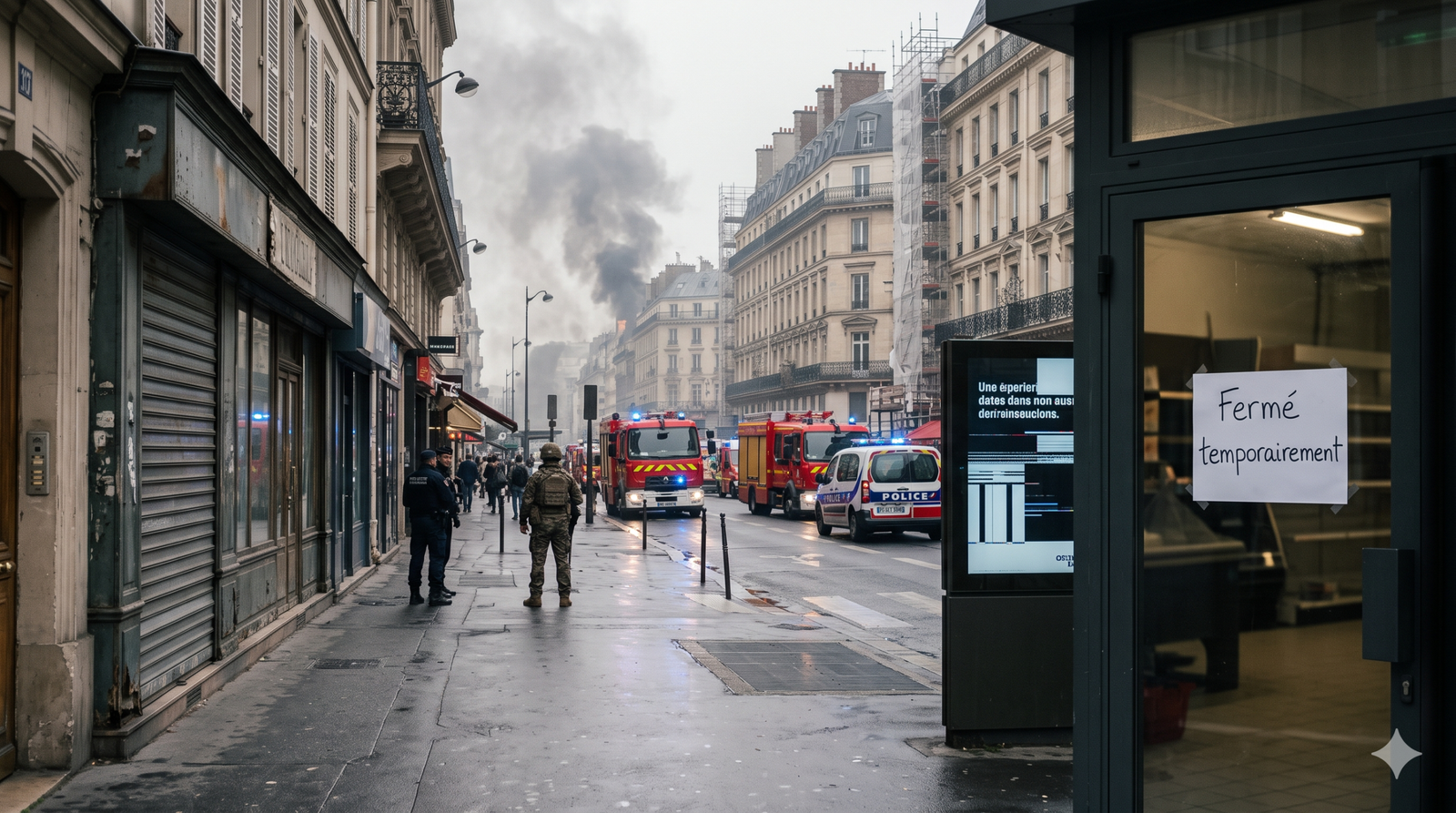
France is currently navigating an extraordinary gauntlet of compounding emergencies. From devastating blazes tearing through the architectural heart of Paris to unprecedented cyber-sabotage spoiling the nation’s food supply, the country is facing a severe, multi-layered stress test.
Crucially, these events are not unfolding in a vacuum. They are colliding against a backdrop of intense macroeconomic pressure and a mounting national debt, creating a perfect storm that has left both the French public and global financial observers on high alert.
Parisian Flames: Historic Landmarks and Infrastructure Damaged
In the span of just a few days, the French capital was rocked by two major fires, threatening both its irreplaceable heritage and its modern infrastructure.
The destruction began overnight between October 11 and 12, when an aggressive fire completely ravaged the Marché des Enfants-Rouges. Built in 1615 under the reign of Louis XIII, it stood as the oldest covered food market in the city a beloved cultural and culinary anchor in the Haut-Marais district. While authorities confirmed there were no casualties, the historic site and its iconic metal structure were destroyed, leaving local traders and generations of residents devastated.
Just days later, on the morning of October 14, thick plumes of smoke once again choked the Parisian skyline. A major fire broke out on the roof of a large building under construction near the bustling Gare d’Austerlitz train station. The blaze rapidly consumed approximately 1,000 square meters of roofing before a massive deployment of firefighters, utilising aerial ladders and advanced firefighting robots, managed to bring the inferno under control.
Digital Frost: Hackers Target the Food Supply
While emergency crews battled physical flames, the nation was simultaneously hit by a sophisticated, invisible assault. In an alarming escalation of modern cyber warfare, hackers successfully infiltrated the refrigeration systems of approximately 700 supermarkets across the country.
This unprecedented attack, which began the exact same night as the historic market fire, compromised the automated cooling equipment of major retailers. By remotely overriding the defrost cycles, the attackers caused internal temperatures in commercial freezers to spike dangerously high, forcing stores to discard massive quantities of fresh and frozen inventory.
French Finance Minister Roland Lescure addressed the severity of the situation directly. While assuring the public that the nation’s overarching food supply chain remained intact, he admitted the incident struck at “the heart of our food security.” The attack exposed critical vulnerabilities in older infrastructure management systems, prompting a sweeping cybercrime investigation by French prosecutors.
The Shadow of Debt: A Fragile Financial Foundation
For economic analysts, the timing of these physical and digital emergencies is particularly precarious. They are converging at a moment when France is already grappling with a severe sovereign debt crisis, echoing the financial anxieties that haunted the European Union over a decade ago.
As government debt yields surge and international borrowing costs skyrocket, concerns regarding France’s long-term fiscal stability are mounting. The administration is caught in an agonising fiscal vice: everyday citizens naturally expect robust, well-funded public services and rapid government responses to crises, yet the ballooning national deficit demands stringent spending cuts and austerity measures.
The Bottom Line
France is currently caught in a complex web of modern vulnerabilities. The sudden loss of historic architecture, the weaponisation of essential food supplies, and the overarching pressure of national debt highlight the fragility of contemporary infrastructure. As the government works to extinguish literal fires and secure its digital borders, the ultimate test will be navigating the economic fallout and restoring a foundation of stability for its citizens and investors alike.
What France’s Crisis Means For Ordinary People
Beyond the headlines, the greatest concern is how these overlapping pressures affect ordinary people. shop workers may face lost hours, families may worry about food prices, and small bussiness could struggle to recover from damaged premises or disrupted operations. For residents, reassurance must come through clear updates, practical support, and visible action—not promises alone. France’s response will depend on transparent investigations, stronger protection for essential systems, and careful financial decisions that safeguard public services while rebuilding trust in institutions today.